The Wisdom of a Walk
Every day we enjoy family breakfast and then head out the front door, often before the valley has fully woken. I love it when the loudest sounds we hear are our footsteps on the ground and the birds singing their tunes. My little girls are with me, one in the stroller and the other by my side, hand in hand or exploring up ahead. “Mommy, look at this!” leaf, stick, turtle or other piece of nature. We have nowhere to be. No destination or agenda. We just move and look for whatever the morning decides to show us.
I started these walks for our bodies, plain and simple. Plans to fill our lungs with fresh mountain air, not recycled indoors. But I pretty quickly noticed that their minds were waking up too. They tell stories (and babble) as we walk. They ask questions about the clouds and the river and the golf course. About the occasional passersby. They invent games and make friends of magnolias blossoms and pine cones. Creativity does not need a desk or crayons. It needs space, time and a little boredom. A walk gives them (and me) all three.
Evenings belong to the four of us. After dinner we step outside together for our evening stroll. Sometimes we follow the same downtown path. Sometimes we turn the other way. The important part is that we do it every single day. There is something powerful about a ritual like this. Kids need to know what comes next. They need to feel the comfort of something steady in a world that moves too fast. A daily walk is not just exercise. It’s is proof that we show up for them at after day in the same quiet way. That consistency builds a safety they’ll carry deep inside them long after they outgrow our arms. It does the same for my husband and me. The rhythm of our steps loosens words we might not say sitting at the kitchen table. Worries shrink and ideas grow. We come home quieter, steadier.
I have read about this for years, but living it feels different. So many of the great thinkers leaned on walks the same way. Aristotle taught his students while they walked together. That is why his school was called the Peripatetic — the walking school. Charles Darwin kept a gravel path behind his house that he called the thinking path. He walked it every day, back and forth, letting his mind work through whatever problem was in front of him. Nietzsche said all truly great thoughts are conceived while walking. Thoreau filled pages and pages about the simple act of putting one foot in front of the other through the woods.
They were not rushing to the next meeting or checking their phones. They were wandering. Letting the land do its work on them. That is what I want for our girls. Not just healthy bodies, but minds that know how to wander and wonder.
Some mornings the walk feels ordinary. We kick rocks. We look for salamanders under wet leaves. We talk about nothing important. Other mornings one of the girls will stop suddenly and point to a spiderweb covered in dew or a hawk riding the air above the ridge. Those small pauses are the whole point. They teach us to pay attention. They remind us that the best things in life usually show up when we are not looking for them.
We live in the mountains of East Tennessee, surrounded by ridges and hollows and rivers that have been here long before us. Walking here feels like stepping into something bigger than our daily schedule. It puts us back in our right size. It reminds us that we belong to this place, not the other way around.
If you are reading this and your days feel noisy or rushed, try it. You do not need perfect trails or fancy shoes. Just step outside with the people you love. Let the walk decide where it goes. Do it again tomorrow. And the day after that. Turn it into something you simply do, the same way you eat dinner or brush your teeth.
The wisdom is not in reaching some finish line. The wisdom is in the walking itself.
We will keep showing up on these paths, morning and evening, for as long as the girls will let us. One day they will be taller than me and their steps will carry them farther than our little valley. But I hope they will always remember how it felt to walk without hurry, hand in hand, through the mist and the mountains. I hope they will always know that some of the best thinking, the best talking, and the best loving happens when we simply put one foot in front of the other and let the world unfold around us.
Vanilla Bean-Honey Panna Cotta with Strawberries
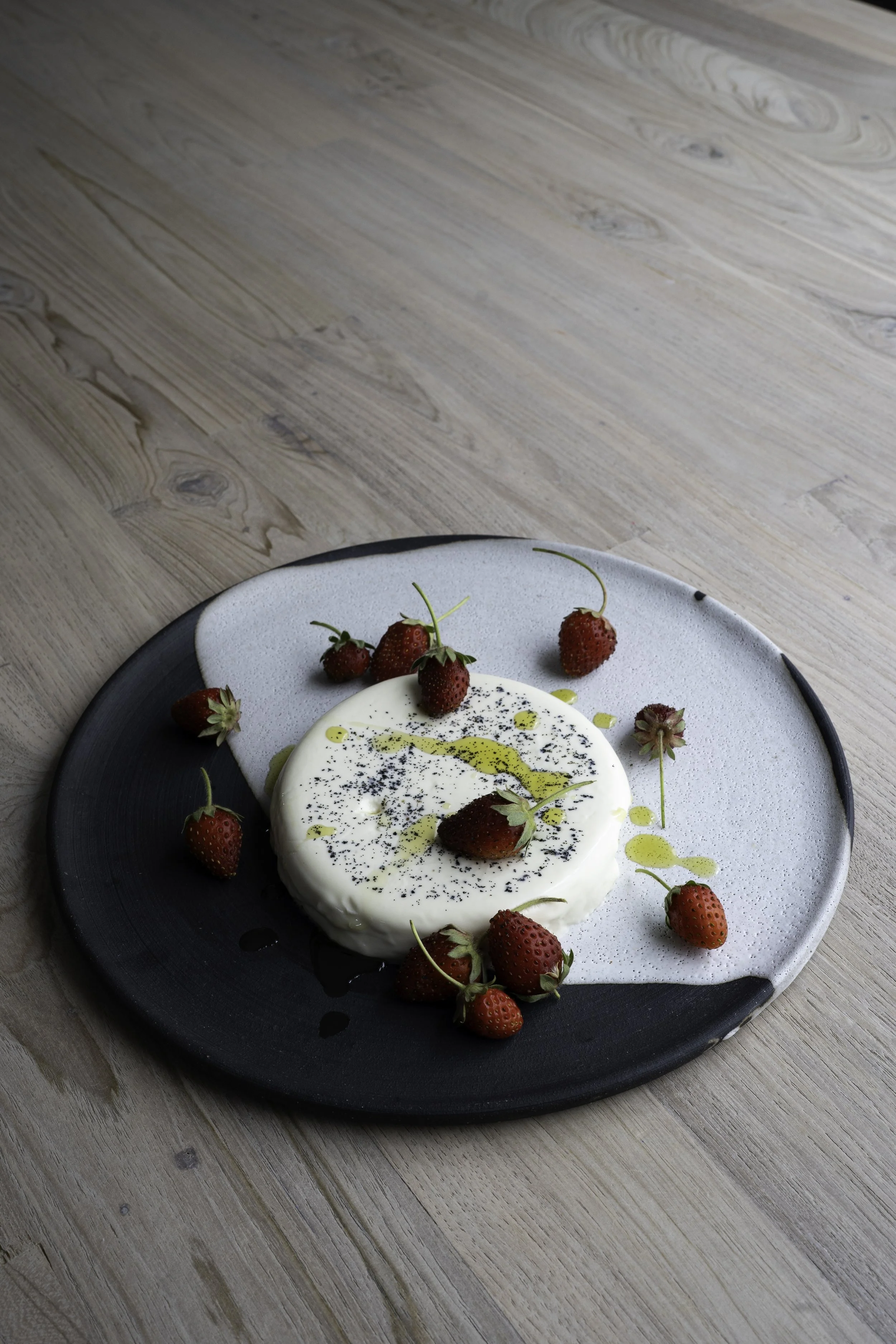
Vanilla Bean-Honey Panna Cotta Served Two Ways
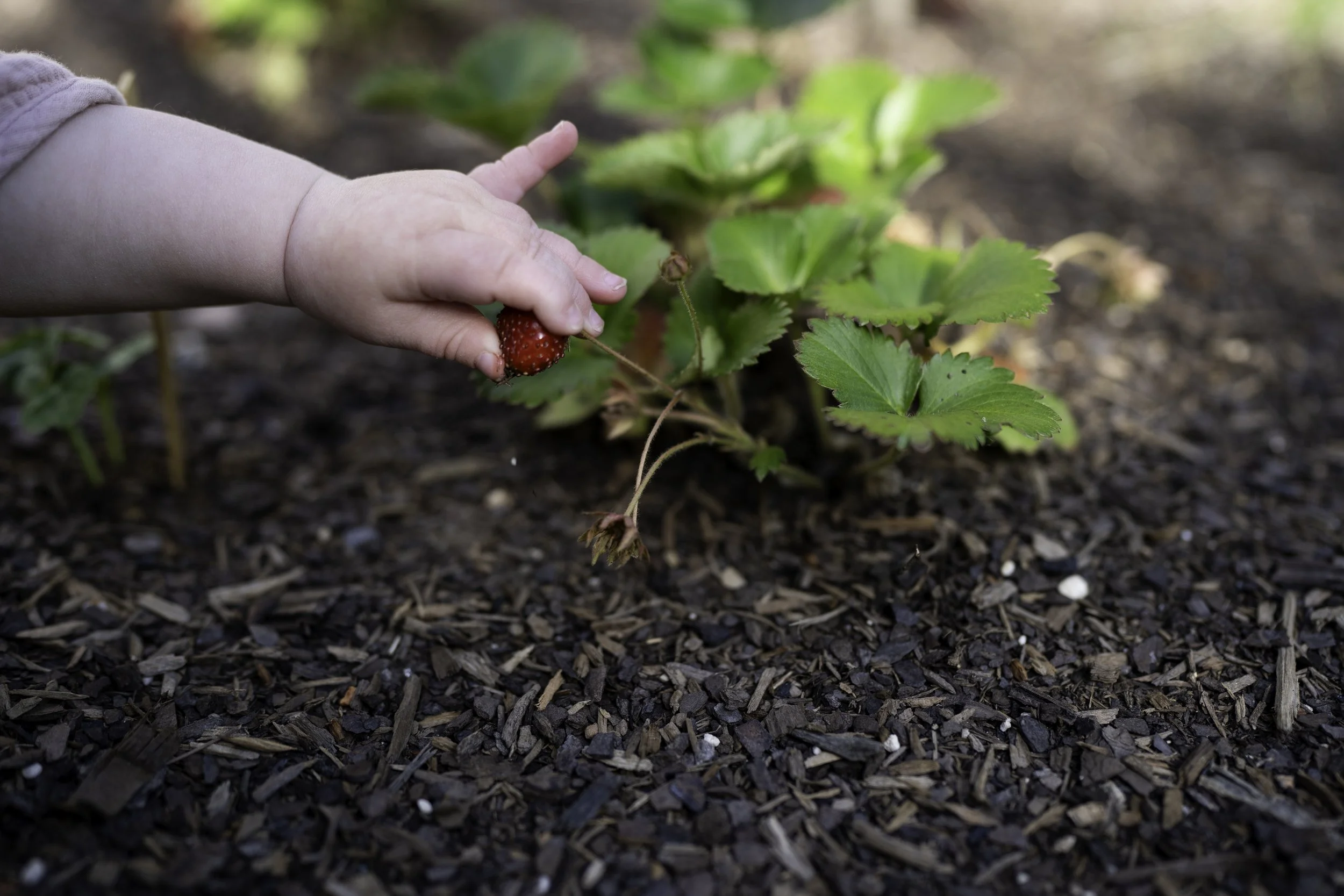
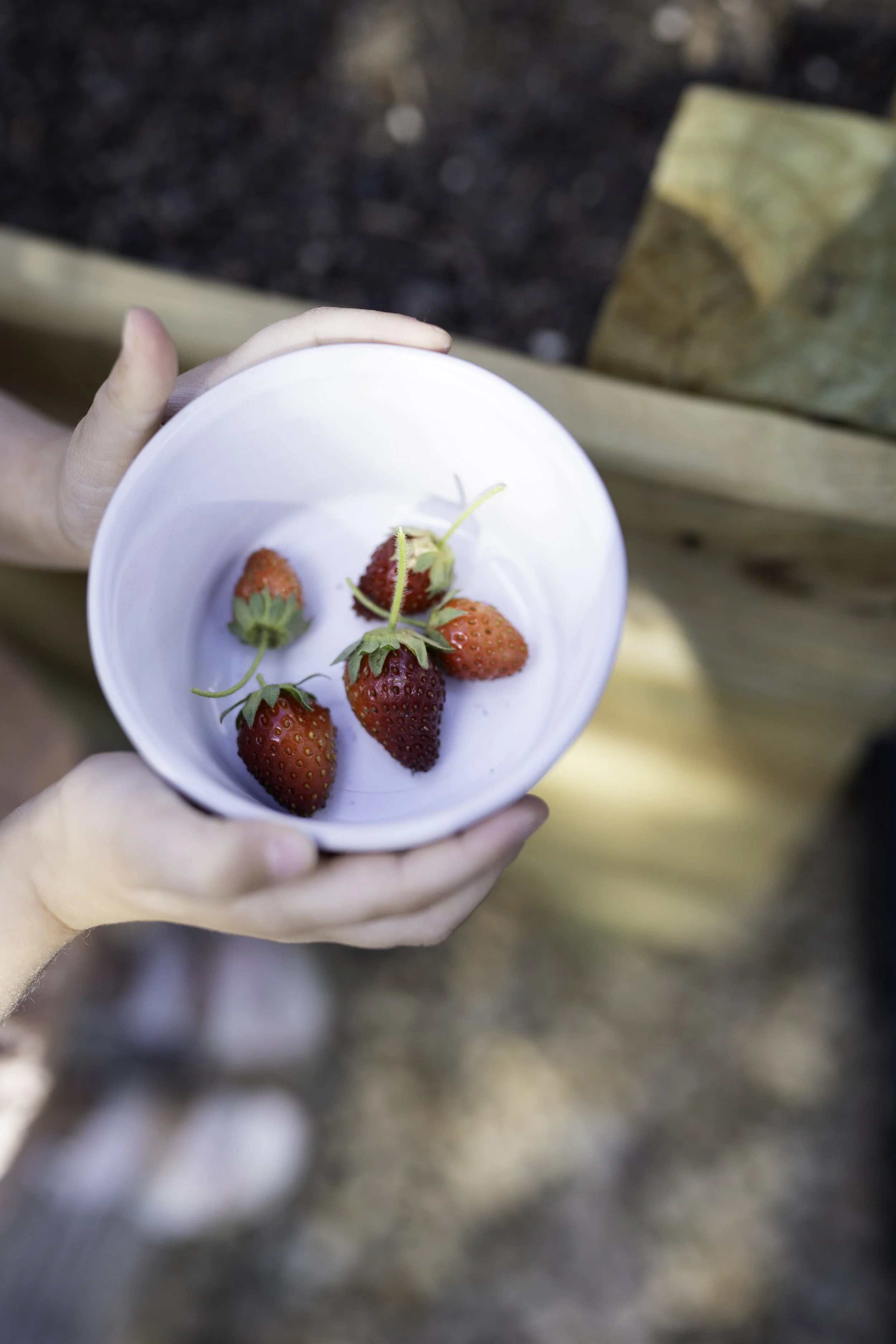
A set panna cotta made with honey and cream, served with strawberries from the garden and a drizzle of basil olive oil or strawberry balsamic. A small record of early season fruit, kitchen testing, and hands full of springtime. This started with strawberries still warm from the garden, some barely making it inside before being eaten by my little helpers. I wanted something soft and cool to hold them, something that would sit quietly under their sweetness instead of competing with it. So, I made panna cotta. Honey instead of refined sugar. Vanilla bean for depth. Cream and half-and-half to make it feel like a dessert worth lingering over.
Ingredients (6–8 servings)
4 cups heavy cream
2 cups half-and-half
1/3 cup honey
2 packets gelatin
1 vanilla bean pod
Method
Split the vanilla bean and scrape the seeds into the cream mixture.
In a saucepan, gently warm the cream, half-and-half, vanilla seeds, and pod. Keep the heat low—just enough to steep the vanilla.
Whisk the gelatine and honey into the warm cream mixture until fully dissolved.
Remove the vanilla pod.
Pour into jars or ramekins.
Chill until set, at least 6 hours or overnight.
To serve
I made two versions. One unmolded onto a plate, soft and trembling, topped with strawberries, a drizzle of basil olive oil, and a little salt in the background of the bite. The other stayed in its jar. More informal, layered with strawberries and finished with strawberry balsamic. Something you can take on a picnic. Both feel right in different ways.
From the archive
Filed under seasonal desserts, garden fruit, and spring.
Week 2 of CSA to Table Project
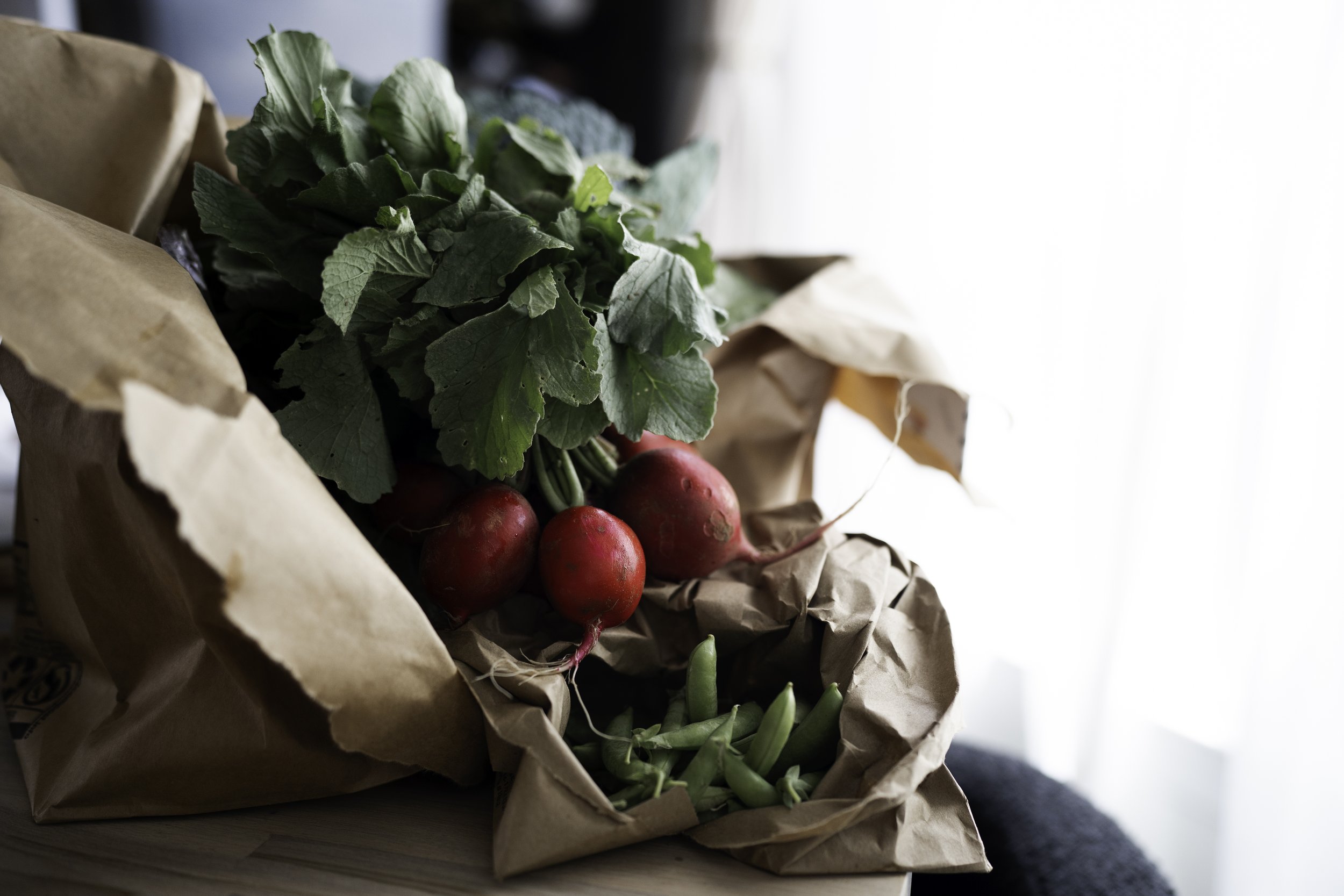
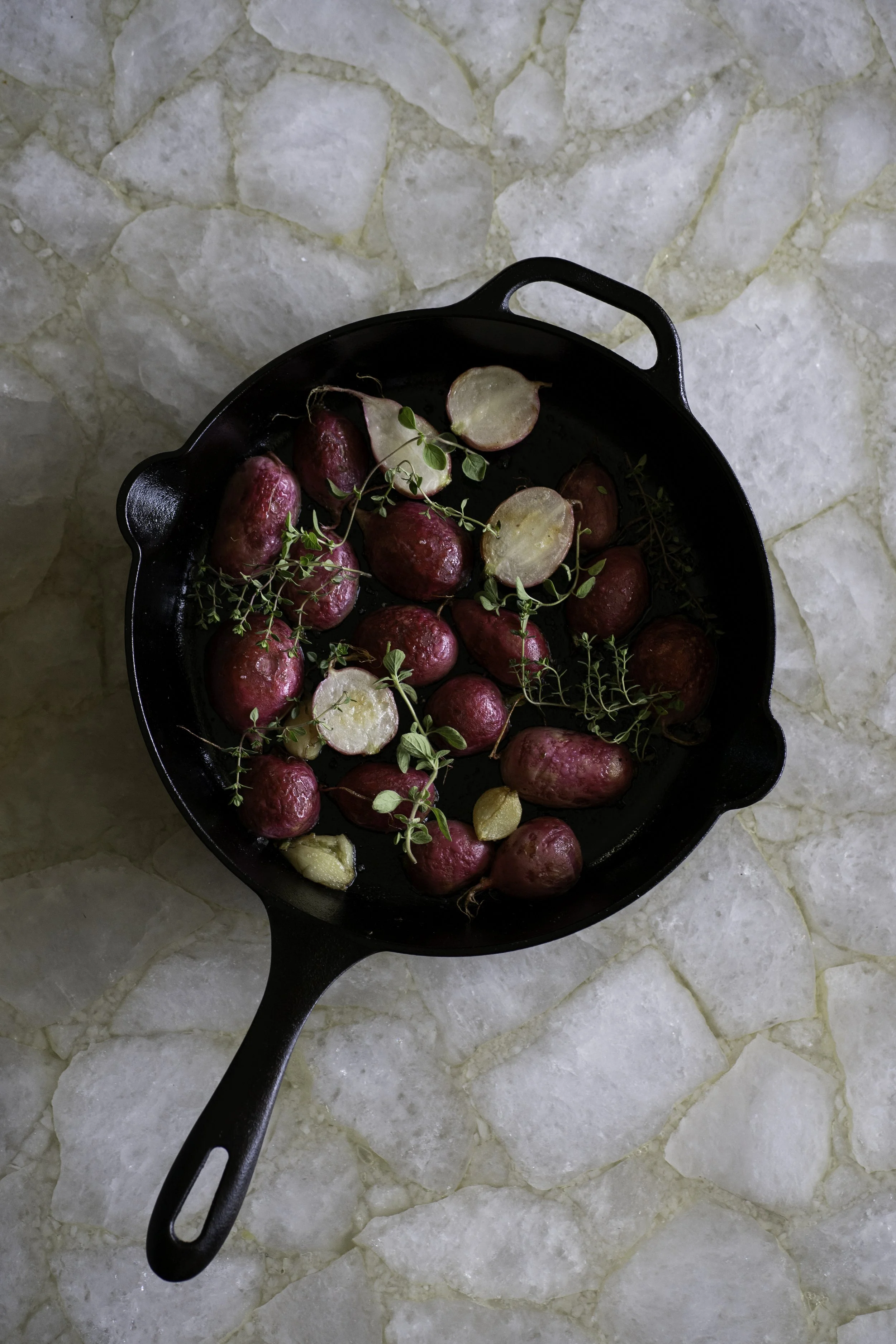
Radishes Roasted in Butter
with Fresh Herbs & Flaky Sea Salt
There is a specific kind of patience required for the first harvest of the year. In our little Tennessee garden, the radishes are still reaching for full size.(It is my first attempt at a proper vegetable garden, after all.) When the CSA box arrived with a surplus of gorgeous bright fuchsia roots, I decided to lean into a simple school of thought: if you can’t beat the heat, mellow it with butter.
I brought them inside in a simple brown paper bag. A humble, crinkled container for something so vibrant. In the span of ten minutes, that aggressive bite transforms into a tender, succulent sweetness. We ate these straight from the skillet, standing at the kitchen counter.
What to do with what:
A bunch of fresh radishes, halved
Two tablespoons of unsalted butter
10–12 sprigs of fresh oregano and thyme, divided
A very generous amount of Maldon flaky sea salt